Patient guide
Understanding Your Cardiovascular Risk
Your cardiovascular risk is your chance of having a heart attack or stroke in the coming years. Knowing it helps you and your doctor decide how much prevention you need.
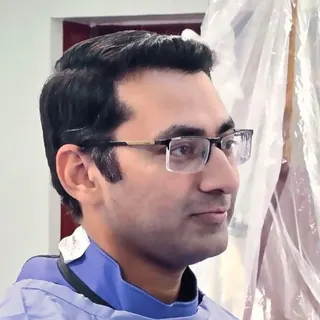
Written for patients of Dr. Azhar ul Hassan Qureshi, Consultant Interventional Cardiologist. Content prepared from current international guidelines · Updated October 2026.
Medical review pending
Key points
- Risk depends on several factors together, not on one number alone.
- Risk calculators estimate your 10-year chance of a heart attack or stroke.
- South Asian ancestry, family history and high Lp(a) can increase risk.
- Most risk factors can be improved, which lowers your risk.
What is cardiovascular risk?
Heart attacks and strokes are mostly caused by atherosclerosis, the build-up of fatty plaque in the arteries. Your risk reflects how likely this process is to cause a problem. It is shaped by factors you cannot change, such as age, sex and family history, and by many that you can.
How risk is estimated
Doctors use validated calculators that combine age, sex, blood pressure, cholesterol, smoking and diabetes status to estimate your 10-year risk. Examples include SCORE2, used in European guidelines, and the ASCVD risk estimator used in American guidelines. These calculators were developed in specific populations, so your doctor will interpret the result alongside other information about you.
Dr. Qureshi explains · YouTube
ASCVD RISK calculator? What is ASCVD risk? In Urdu دل کی بیماریوں کا رسک
Video · 1:27 · Watch on YouTube
More from the channel
Factors that can increase your risk further
- a family history of early heart disease
- South Asian ancestry
- high lipoprotein(a), or Lp(a)
- chronic kidney disease
- chronic inflammatory conditions
- pregnancy complications such as pre-eclampsia
Normal cholesterol does not mean zero risk
A heart attack can occur even when cholesterol looks normal, because smoking, diabetes, high blood pressure, family history and other factors also play a part. This is why overall risk, rather than a single test, guides prevention.
Numbers worth knowing
- Blood pressure: measured correctly, including at home
- LDL cholesterol and, at least once, Lp(a)
- Blood sugar or HbA1c
- Waist size and weight
- Smoking and tobacco status
If you would like a personal risk assessment, see preventive cardiology.
References
- Visseren FLJ, et al. 2021 ESC Guidelines on cardiovascular disease prevention in clinical practice. Eur Heart J 2021;42:3227–3337. doi.org/10.1093/eurheartj/ehab484 (opens in a new tab)
- Arnett DK, et al. 2019 ACC/AHA Guideline on the Primary Prevention of Cardiovascular Disease. Circulation 2019;140:e596–e646. doi.org/10.1161/CIR.0000000000000678 (opens in a new tab)
- Volgman AS, et al. Atherosclerotic cardiovascular disease in South Asians in the United States: epidemiology, risk factors, and treatments. A scientific statement from the American Heart Association. Circulation 2018;138:e1–e34. doi.org/10.1161/CIR.0000000000000580 (opens in a new tab)
- Kronenberg F, et al. Lipoprotein(a) in atherosclerotic cardiovascular disease and aortic stenosis: a European Atherosclerosis Society consensus statement. Eur Heart J 2022;43:3925–3946. doi.org/10.1093/eurheartj/ehac361 (opens in a new tab)
- Yusuf S, et al. Effect of potentially modifiable risk factors associated with myocardial infarction in 52 countries (the INTERHEART study). Lancet 2004;364:937–952. doi.org/10.1016/S0140-6736(04)17018-9 (opens in a new tab)
This guide is general health information, not personal medical advice. If you are worried about your symptoms, speak to a doctor. In an emergency call 1122. Medical disclaimer.
On this page
Book a consultation
- Rawalpindi Institute of Cardiology (RIC), Room 8
- Monday to Friday, 3:00 PM to 8:00 PM
- +92 307 5793387
Keep reading
More patient guides
The symptoms to recognise, and exactly what to do in the first minutes.
ECG, troponin, exercise test, echocardiogram and angiography, in plain language.
Blood thinners, recovery, warning signs and long-term protection after angioplasty.
Book a consultation with Dr. Qureshi
Clinic at Rawalpindi Institute of Cardiology (RIC), Room 8. Monday to Friday, 3:00 PM to 8:00 PM. Call or WhatsApp +92 307 5793387.